
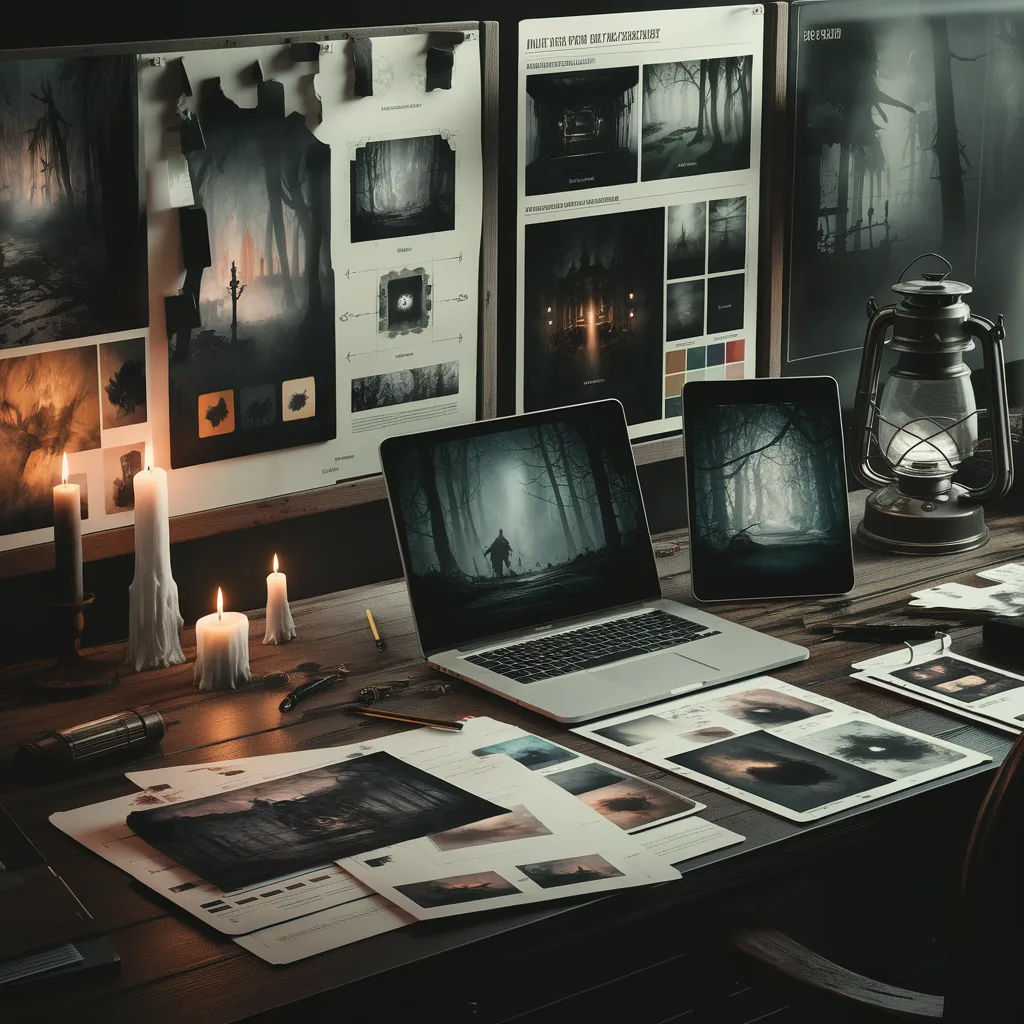
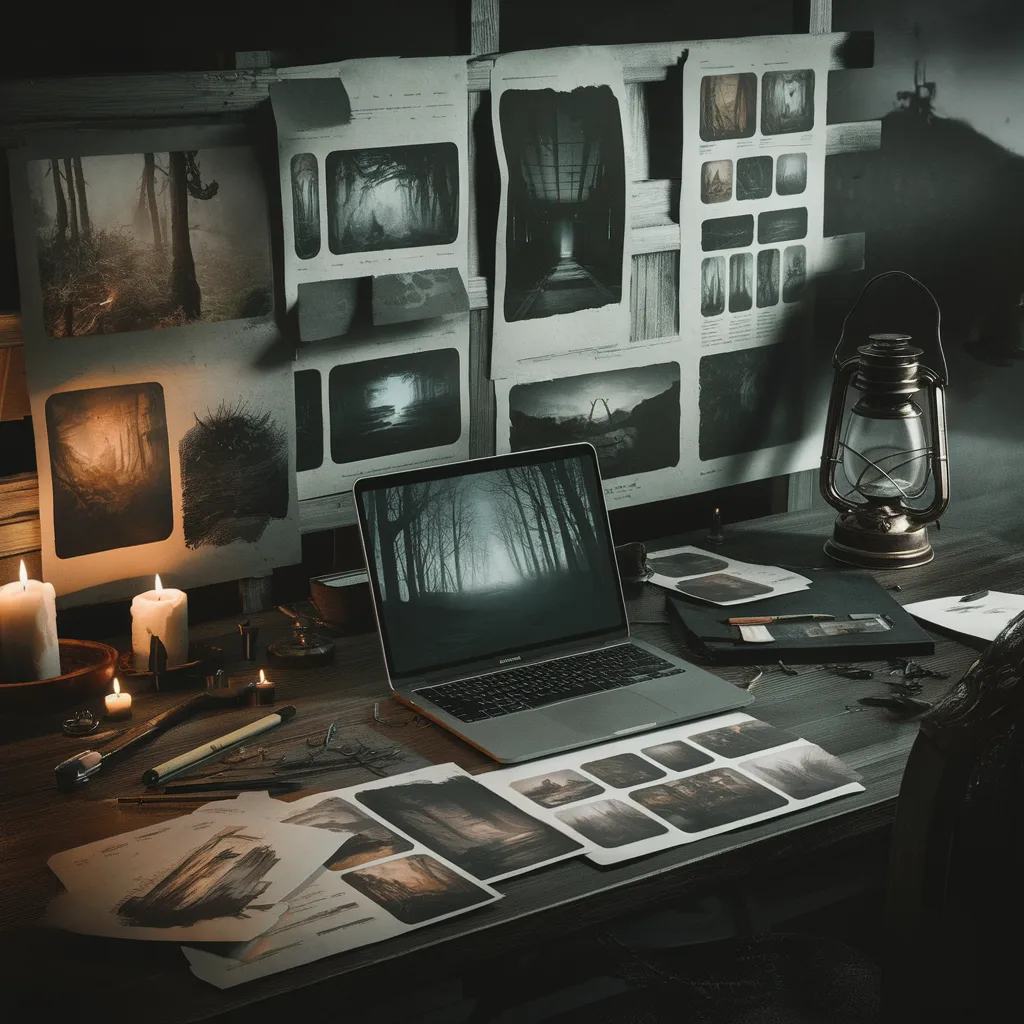
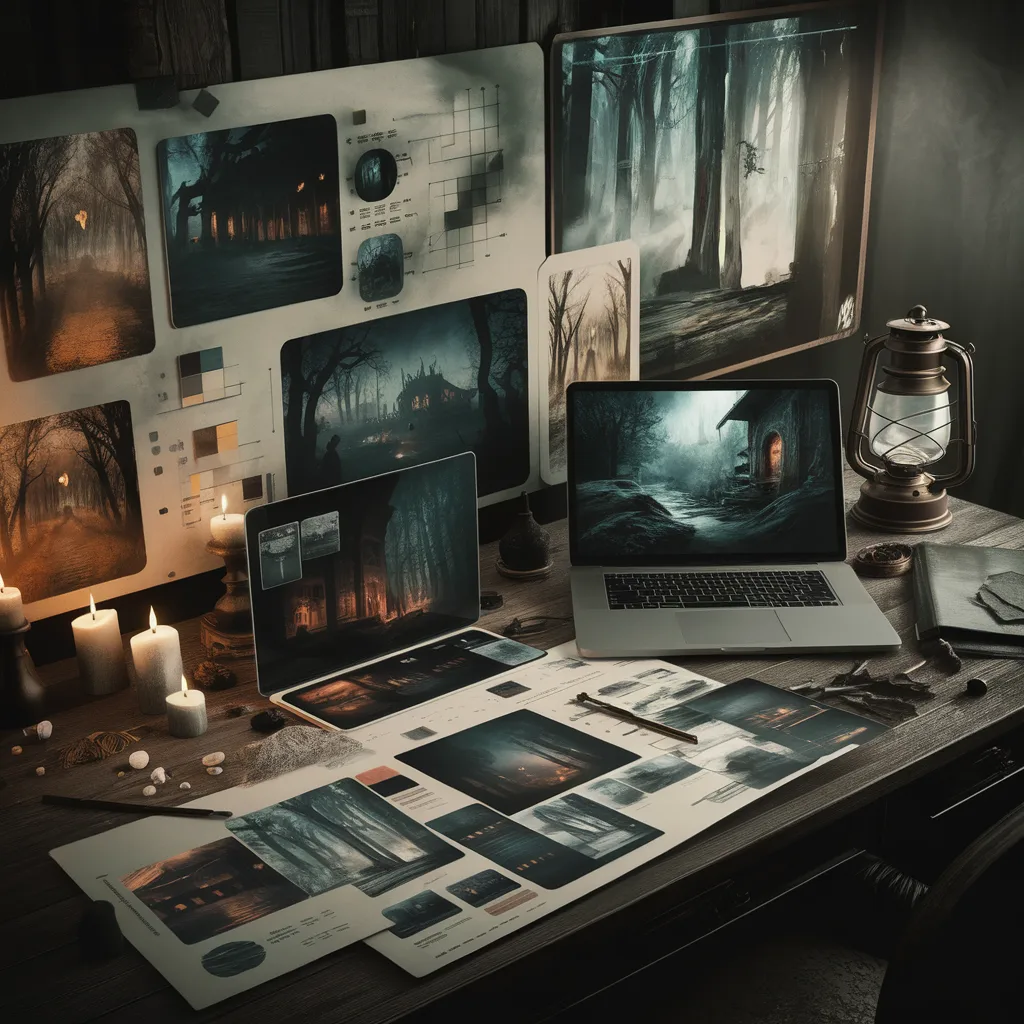
Horror Setting and Atmosphere Design Framework
🌑 Atmosphere Is Not Where the Story Happens. Atmosphere Is Half the Story.
Ask any devoted reader of horror fiction to describe the books that disturbed them most, and they will describe settings as vividly as they describe characters or plots. Hill House, with its cold and darkness, its angles that shouldn’t be angles, its rooms that press wrongly on the mind. The Overlook Hotel, snow-isolated, warm-lit, wrong. The house in “Mexican Gothic” with its wallpaper that moves and its scent that coats and its basement that you cannot stop thinking about. The locked room in Poe. The fog in du Maurier’s Cornwall. The particular late-afternoon light in every Joyce Carol Oates story that signals the worst is about to begin.
Horror settings are not backdrop. They are not the container for the story. They are participants in it: active, specific, purposeful agents of dread whose architecture, sensory texture, history, and relationship to the characters create the atmospheric pressure that makes horror fiction feel inescapable rather than escapable. Great horror settings trap you inside the story’s world the way a nightmare traps you inside its logic. You cannot step back from them because they feel too real, too present, too specific, too wrong in exactly the right way.
The Horror Setting and Atmosphere Design Framework is the most comprehensive digital resource available for fiction writers, screenwriters, game designers, and horror creators who want to design horror environments with the same intentionality and craft that the genre’s best practitioners bring to them. It is not a collection of spooky setting descriptions to paste into your work. It is a complete design methodology: a systematic approach to creating horror settings that are architecturally coherent, psychologically resonant, historically weighted, and atmospherically precise.
📦 Complete Digital Download Contents
Digital-only. Nothing ships. Instant access includes:
The Setting Design Methodology Guide (.pdf, 52 pages) The intellectual and craft foundation of the entire framework, organized into five major sections:
Section 1: The Horror Setting as Psychological Architecture (12 pages) How horror settings work on the reader’s psychology and how to design with those mechanisms in mind. Covers: the uncanny in physical spaces (what makes a place feel wrong without being literally wrong, and the specific architectural, sensory, and contextual triggers that produce this response), Bachelard’s poetics of space applied to horror design (the phenomenology of rooms, corridors, thresholds, attics, basements, and liminal spaces), the isolation principle (why horror settings almost universally isolate their characters, and the physical and psychological forms that isolation takes), the wrongness taxonomy (six categories of spatial wrongness that horror settings use, from the geometrically incorrect to the historically contaminated), and the reader’s embodied response to described space (how readers inhabit described settings and what that means for horror atmosphere design).
Section 2: The Five Atmospheric Registers (14 pages) A framework for designing settings that produce specific emotional tones with precision rather than hoping general darkness produces the right effect. The five registers: Dread (anticipatory, object-less fear of what hasn’t happened yet), Unease (persistent low-grade wrongness without identifiable source), Menace (the awareness of active threat, directed and present), Decay (the horror of time, entropy, and the corruption of the familiar), and The Sublime (the horror that comes from scale, power, and the human’s smallness before incomprehensible force). For each register: the specific physical and sensory elements that produce it, the narrative contexts where it is most effective, craft examples from horror fiction and film, and the specific mistakes that undermine it.
Section 3: Setting History and Contamination (14 pages) How a setting’s history becomes part of its horror. Covers: the principle that horror settings are almost always haunted by their past whether or not they contain literal ghosts, how to design the history of a horror setting so it functions as an active presence rather than backstory, the architecture of the reveal (how to dole out setting history for maximum horror effect), different types of place-history (violence, suffering, concealment, corruption, sacrifice, abandonment) and the specific atmospheric qualities each produces, and how to research real location histories for horror fiction inspiration.
Section 4: The Sensory Construction of Horror Atmosphere (12 pages) The specific sensory details that build horror atmospheres, organized by sense. For each of the five senses: the sensory qualities most reliably associated with dread (not fear, specifically dread), the specific textures, sounds, smells, tastes, and bodily sensations that horror writers have found most reliably effective, the danger of over-reliance on visual horror at the expense of the other senses, and how to layer sensory details for compound atmospheric effect. Special sections on: sound design in horror fiction (the sounds that horror stories return to again and again and why), smell as the most underused horror sense (and the specific olfactory details that produce the strongest dread responses), and temperature and tactile sensation as horror tools.
Section 5: Dynamic Settings (10 pages) Settings that change, degrade, or respond to characters over the course of a story. Covers: the horror setting as a living entity with its own arc, environmental deterioration as horror escalation (how to track and design the physical changes that mark a story’s dread progression), the specific craft of describing the same setting at different points in a story so the reader feels the change as horror, the responsive setting (the environment that seems to react to characters’ psychological states), and the transformation horror setting (the setting that changes from safe to threatening over the course of the narrative).
The Location Design Workbook (.docx, 22 location-type templates) Twenty-two fully structured design templates for the horror genre’s most significant location types. Each template contains: a history design framework (prompts for creating the specific history that haunts this type of location), an architectural wrongness design guide (the specific structural and spatial elements that make this location type feel threatening), an atmosphere registration guide (which of the five atmospheric registers this location type typically produces and how to tune it), a sensory detail library (curated sensory details specific to this location type that horror writers and filmmakers return to, organized by sense), a character-location relationship framework (how this type of location specifically affects and interacts with different character types), and a famous examples reference (the most iconic uses of this location type in horror fiction and film, with craft notes).
Location types covered: the isolated house, the hotel, the hospital/asylum, the school, the forest, the small town, the cave/underground, the sea/water body, the fog, the empty road, the abandoned place (general), the basement, the attic, the corridor, the locked room, the mirror/reflection space, the dream space, the dollhouse/miniature (the horror of scaled-down worlds), the digital space (contemporary horror’s new uncanny frontier), the domestic interior turned threatening, the church/religious space, and the liminal space (airports, train stations, waiting rooms, the horror of the in-between).
The Atmosphere Design Toolkit (.pdf + printable worksheets, working system) A collection of practical design tools for active atmosphere construction:
- The Sensory Layer Builder: A worksheet for systematically building a setting’s sensory atmosphere across all five senses, with prompts for each sense at each atmospheric register, producing a complete sensory profile for a scene’s setting
- The Setting History Timeline Template: A structured template for developing the full history of a horror location from its origin through its current state, with prompts for identifying the specific historical events that become the seeds of horror
- The Wrongness Audit: A checklist for evaluating a described setting against the six wrongness categories, identifying which types of wrongness are present and which might be added for compound effect
- The Atmosphere Progression Chart: A scene-by-scene tracker for mapping how the atmosphere of a setting shifts over the course of a story, ensuring that atmospheric escalation is deliberate and consistent
- The Contrast Framework: A worksheet for designing the safety/threat contrast that makes horror atmospheres work (the setting must feel safe before it can feel threatening, and this framework structures the safe version and the corrupted version of the same space)
Visual Inspiration and Reference Archive (.pdf, 88 pages of curated atmospheric reference) A curated visual and descriptive reference organized by location type and atmospheric register, containing: detailed descriptions of iconic horror settings from literature and film analyzed for their craft elements, architectural and design principles that produce horror atmospheres in real-world spaces, historical settings from different periods and regions that have been associated with horror or the uncanny, and a photographic description archive (verbal descriptions of real photographs of atmospheric locations, created as writing inspiration rather than actual photographs, for use as sensory writing prompts).
Horror Atmosphere Sentence and Paragraph Starters (.docx, 280 craft examples) Two hundred and eighty annotated craft examples of atmospheric horror writing at the sentence and paragraph level, organized by atmospheric register and sensory mode. These are not fill-in-the-blank templates: they are examples of how professional-quality atmospheric horror prose works, designed to be read as craft models and to inspire original atmospheric writing rather than to be copied.
🎯 Who This Framework Reaches Into
- Horror fiction writers who want to design settings with the deliberateness of the genre’s best practitioners
- Screenwriters developing horror films or series who want a systematic approach to production design atmosphere
- Tabletop RPG and video game designers building horror environments
- Horror writers who have received feedback that their settings feel generic or thin
- Dark fiction writers in adjacent genres (Gothic romance, dark fantasy, dark literary fiction) who want to develop their atmospheric toolkit
🗃️ What Haunts Your Download Folder
📖  Setting Design Methodology Guide — 52 pages of atmosphere design theory and craft (.pdf)
📋  Location Design Workbook — 22 horror location-type templates, fully structured (.docx)
🛠️  Atmosphere Design Toolkit — 5 working worksheets for active setting construction (.pdf + printable)
🖼️  Visual Inspiration and Reference Archive — 88 pages of curated atmospheric reference (.pdf)
✍️  Horror Atmosphere Sentence Starters — 280 annotated craft examples by register and sense (.docx)
Reviews
There are no reviews yet.